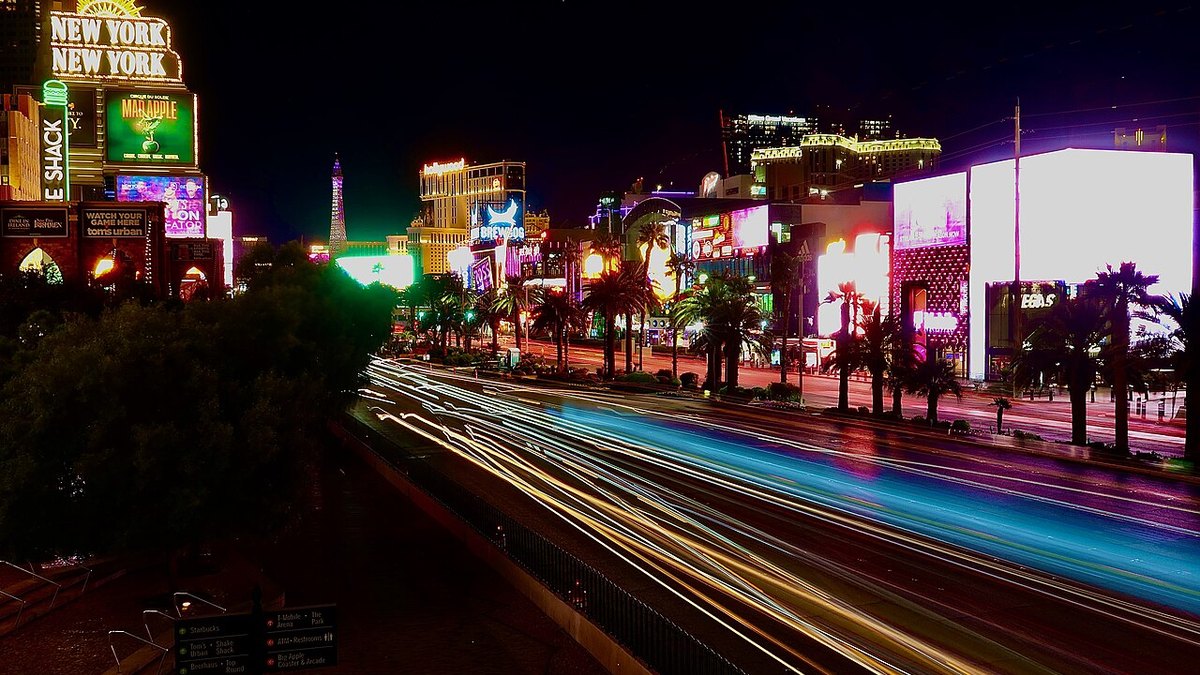
Las Vegas is a city that can turn an ordinary night into a production involving thirty-foot visuals, international DJs, dancers, lasers, and a bottle-service bill that could make an accountant cry.
And that's before the promoter checks the final numbers.
The city remains one of the most recognizable entertainment markets in the world. But the latest tourism figures are a reminder that global reputation, festival attendance, and profitability are three different things.
You can fill a room and make money. You can fill a room and lose money. The camera rarely tells you which one happened.
THE NUMBERS BEHIND THE LIGHTS
The Las Vegas Convention and Visitors Authority reports that the destination received approximately 38.5 million visitors in 2025, a 7.5% decline from 2024. Its 2025 research also shows 80.3% overall hotel occupancy, 88.8% weekend occupancy, and 76.6% midweek occupancy. The destination had approximately 150,300 hotel rooms.
Those are enormous figures by almost any measure. They also suggest why timing matters. Weekend demand is not identical to weekday demand, and a city with tens of millions of annual visitors doesn't guarantee that any individual room will sell out on any individual night.
To be clear, these are destination-wide tourism statistics. They aren't nightclub attendance figures, and they don't tell us what any particular operator earned or lost. Nobody should use them to invent a club's profit margin.
But they do tell us that Las Vegas is a competitive market operating inside a changing travel economy.
THEN EDC TURNS THE VOLUME UP
Electric Daisy Carnival gives us the other side of the picture.
Insomniac's 2026 edition marked the festival's 30th anniversary. The organizer's May 2026 announcement described a sold-out event with hundreds of thousands of attendees and more than 450 artists across 18 music areas and art cars. Other industry reporting estimated attendance at more than half a million across the festival.
Those are enormous event figures, but a festival's multi-day attendance figure should not automatically be read as unique travelers arriving in Las Vegas. The same person can attend multiple days, and some attendees already live nearby.
The economic effects can nevertheless reach beyond the speedway. Visitors book rooms, use transportation, eat at restaurants, visit bars, and consider club events before or after the festival. The challenge for individual businesses is capturing relevant demand without spending more than that demand can support.
Insomniac has already announced a bold 2027 experiment called Dusk Till Dawn: two separate festival weekends, May 14–16 and May 21–23, with a wider twelve-day experience from May 13 through May 24. The official festival FAQ says both weekends are planned to have the same lineup and production standards.
There is another practical wrinkle for operators: Insomniac announced in September that its Camp EDC program would stretch from May 13 to May 24, including a through-camping option covering both weekends. In its September 30 follow-up announcement, the organizer outlined events around the city as well as the two Speedway weekends. EDC's official FAQ still describes identical lineups and production quality as the plan, not as a list of acts that has already been delivered.
For businesses, those details create several different customers: the first-weekend visitor, the second-weekend visitor, the person staying between them, and the local resident who may attend an off-site party but never buy a Speedway ticket. They may have very different available budgets and schedules. A twelve-day calendar is not twelve consecutive days of guaranteed sellouts.
That gives hospitality operators new dates to plan around. It doesn't mean every hotel room or nightclub seat is sold twelve days in a row. That's where planning comes in.
BIGGER PRODUCTION, BIGGER BILL
Here's the part that doesn't fit in the festival aftermovie: someone has to pay for everything.
A high-profile Las Vegas event can involve artist guarantees, flights, hotels, audiovisual systems, lighting programmers, security, staffing, marketing, insurance, ticketing charges, venue arrangements, and other costs. Depending on the agreement, revenue from tickets, tables, bars, sponsors, and hospitality may belong to different parties.
That's why 'we sold out' is not the same as 'we made money.'
A successful high-capacity event may carry strong sponsorship support or unusually favorable venue terms. A smaller event may face a large artist guarantee and limited ticketing headroom. Without the deal terms, there is no responsible way to say which promoter came out ahead.
Consider an illustrative—not actual—example. A room sells 1,000 tickets at an average realized ticket price of $80. That's $80,000 in gross ticket receipts. If talent, production, venue costs, staff, marketing, and fees collectively cost $90,000, the event is $10,000 short before any additional revenue or adjustments.
Change the costs to $65,000 and the picture looks very different. Neither scenario tells us what a real Las Vegas venue earns. It demonstrates why a packed photograph tells us so little.
THE DATE IS A BUSINESS DECISION
Now look again at the LVCVA occupancy numbers. Weekend hotel demand is stronger on average than midweek demand. That's a useful planning signal, but it creates its own complication.
A popular weekend can deliver more potential customers while also raising hotel rates, competing entertainment options, and the cost of attracting the right artist. A convention or special event might make a particular weekday unusually attractive. There's no automatic answer.
Promoters must study who is in town, why they're there, which audiences overlap with their performers, and whether attendees are likely to buy another ticket after paying for the main event.
In some cases, the best strategy is a giant event. In others, it's a well-programmed late-night party, a thoughtfully priced daytime session, or a smaller room that understands its audience better than anybody else.
Las Vegas isn't one single dance floor. It's a collection of very different businesses competing for attention—and for the same finite amount of disposable money.
WHAT A SMALLER VENUE CAN LEARN
A small operator doesn't need to imitate the world's largest production to offer something valuable.
What the operator does need is a realistic budget, a clear audience, a music policy, dependable staff, and an event calendar that takes the rest of the city seriously. If ten other venues are chasing the same audience with the same sound on the same night, originality may be a better investment than another LED wall.
There can also be advantages in being intentionally small. The right 250-person room can build a loyal community by booking artists who suit its identity, giving staff room to deliver good service, and making guests feel that the night was created for them.
That doesn't establish higher profits for smaller venues, and we aren't pretending it does. It means profitability depends on the agreement between demand, pricing, costs, and execution—not a single measure of scale.
THE BOTTOM LINE

Las Vegas remains a world-class entertainment destination. EDC's expansion is a major sign of continued ambition, while the tourism data show that operators can't rely on momentum alone.
A full dance floor is good. A satisfied audience is better. A profitable event that gives people a reason to return is where the entertainment business becomes sustainable.
The lasers create the spectacle. The numbers decide whether you can afford to turn them on again next month.
EARLIER DJ HANGOUT COVERAGE
The original report is preserved at https://www.thedjhangout.com/news/21. This new feature expands the reporting and analysis rather than deleting the older article.
Global visitation and extended electronic-music events can create new venue opportunities.
Attendance figures are not individual venue income statements; sample budgets are illustrative.
REPORTING SOURCES
Public reporting and primary references used to check this story. Analysis and illustrative examples are distinguished from disclosed earnings and private financial records.