Rolling Stone Australia, The Guardian, the Herald Sun, and The Music Network covered Dom Dolla's historic Melbourne concert. ABC's triple j covered the event ahead of the show.
They talked about the music, the crowd, the lasers, and the spectacular production. We've got a few other questions. Who organized it? Who financed it? How much money came in? And where did all that money go?
A Ferrari down payment? A 30-day vacation in the Maldives? Somebody finally paying off their credit card? Who knows? We're joking, of course. But behind this incredible night was a serious entertainment business involving some of Australia's biggest promoters and millions of dollars.
On Thursday, September 24, 2026, Dom Dolla performed at Melbourne's Marvel Stadium before approximately 60,000 fans, according to the promoters. Sixty thousand people. On a Thursday. Granted, it was the eve of a long weekend, but that's still an extraordinary accomplishment.
And Dom wasn't alone. Chicago house and techno legend Green Velvet, also known as Curtis Jones and Cajmere, joined Australian house favorite Torren Foot. Melbourne underground veteran DJ JNETT performed back-to-back with RONA., the Kaytetye DJ and producer from Central Australia. British singer-songwriter Clementine Douglas made a surprise appearance during Dom Dolla's “Miracle Maker.” Quite a lineup for one Thursday night.
Dom Dolla, the Melbourne-raised producer who has become one of Australia's biggest international electronic-music exports, was the main attraction. But getting 60,000 people into a stadium requires more than a talented DJ and a good playlist.
Enter Untitled Group and Frontier Touring, the concert's co-promoters. Untitled Group is a major force in Australian electronic music, while Frontier Touring has decades of experience presenting international and domestic artists.
In 2019, AEG acquired 50% of Frontier Touring, subsequently increasing its ownership to 80%, according to AEG chairman Jay Marciano in an interview with Music Business Worldwide. That's AEG Presents, one of the world's largest live-entertainment companies.
Frontier's story, however, began with legendary Australian music entrepreneur Michael Gudinski. Gudinski founded Mushroom Records in 1972 and Frontier Touring in 1979, helping develop Australian artists and bring major international performers to the country. He died in March 2021, leaving an extraordinary entertainment legacy. A company founded in 1979 eventually became part of a global concert-promotion operation. Not bad.
AEG's ownership doesn't establish that it directly financed this particular concert, but the connection demonstrates the scale of the business behind the event.
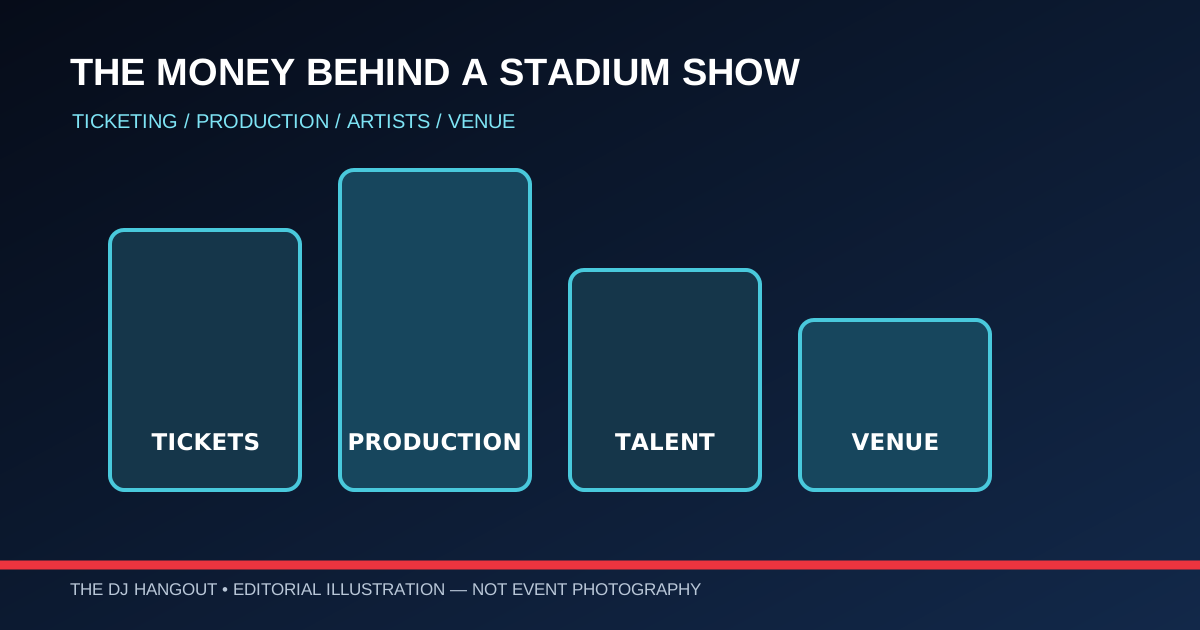
Now let's count the money. Advertised ticket prices ranged from A$59.90 to A$499.90, with general admission at A$199.90. Those prices included GST.
Using an illustrative average ticket price of approximately A$133.33 across 60,000 paid admissions, our working projection puts gross ticket revenue at approximately A$8 million. That assumes all 60,000 attendees purchased tickets; the actual paid-ticket breakdown hasn't been published. Eight million Australian dollars. For one Thursday night.
Of course, that's gross revenue, not profit. The artist, stadium, production companies, and crews all need to get paid. And somewhere there's an accountant who probably hasn't slept properly in weeks.
As for Dom Dolla's payday, his actual performance fee hasn't been publicly disclosed. Was it a guarantee? A percentage? Both? We'd love to know. And the Ferrari? We'll leave that to his accountant.
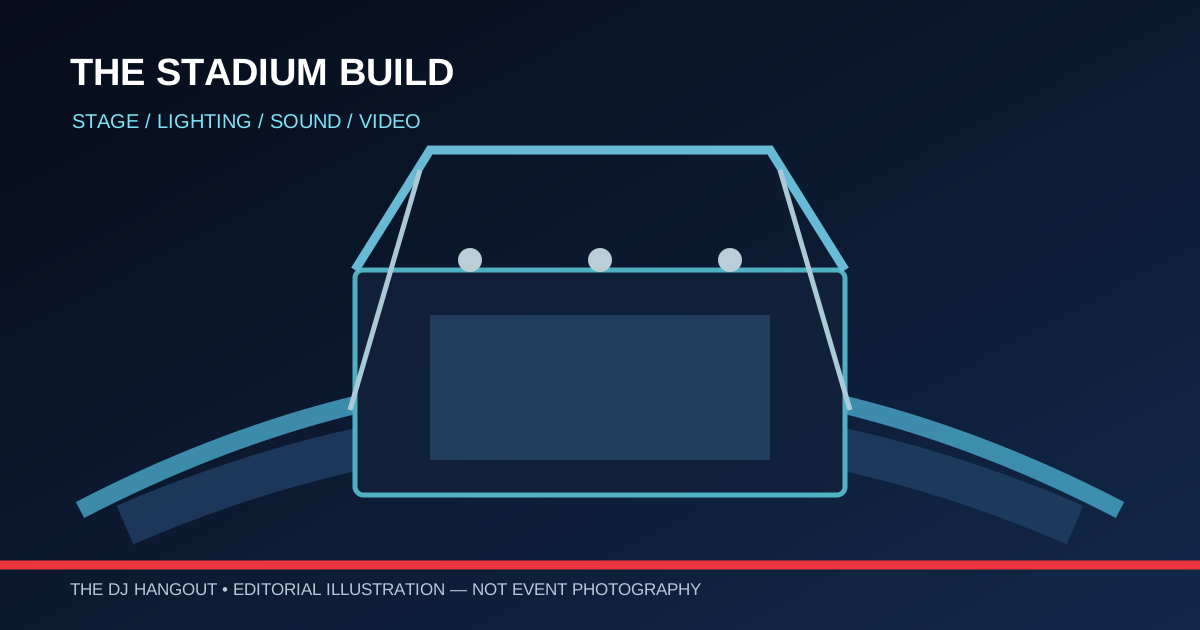
But the money wasn't the only impressive part of this concert. The production was enormous. Gig Control Australia was identified as part of the production collaboration, helping coordinate the technical operation.
Novatech Creative Event Technology supplied major LED and video systems, including ROE Visual LED pillars, transparent screens, cameras, and technical communications. Its equipment and crew travelled from Adelaide to Melbourne. One effect used laser mapping and transparent LED screens to make parts of the stage appear to burn away, revealing lighting behind them. Now that's more exciting than watching a DJ walk onstage carrying a USB stick.
The show featured towering visual structures, lasers, flames, and sophisticated technical effects. Rolling Stone Australia highlighted the spectacular homecoming. The Guardian described fireworks, fireballs, and lasers. Frontier Touring celebrated the transformation of Marvel Stadium into Australia's biggest nightclub for the evening. And somebody had to design, transport, build, program, and operate all that equipment.
The sound system was another major undertaking. The Herald Sun reported a sound problem affecting part of the audience for approximately 20 minutes. Not exactly ideal when 60,000 people have come to hear music. But the overall achievement remains remarkable.
Whether you're promoting a 300-person nightclub event or a 60,000-person stadium concert, success begins with the right artist, audience, market, and date. Dom Dolla's hometown connection, the long-weekend timing, and the ambitious production all helped make this special.
There was a time when DJs were tucked into nightclub corners, barely visible behind their equipment. Now they're commanding stadiums.
Dom Dolla, Green Velvet, Torren Foot, DJ JNETT, RONA., and Clementine Douglas, alongside Untitled Group, Frontier Touring, Marvel Stadium, and the production teams, all contributed to a historic milestone for Australian electronic music. AEG's ownership connection to Frontier adds another dimension to that achievement.
And here's one last number: 152 days. The concert was publicly announced on May 25, 2026, exactly 122 days before the September 24 performance. Add our estimated 30 days for preliminary negotiations, venue arrangements, and contracts, and you're looking at approximately five months. Some work may have started earlier. Not bad for five months' worth of work.
A sold-out stadium. Approximately A$8 million in projected gross ticket revenue. One enormous electronic-music production. And a remarkable achievement for the artists, promoters, and everyone who helped make it happen.
Who made the most money? We'd need the final contracts and settlement to answer that one. Maybe somebody bought a Ferrari. Maybe somebody took that 30-day vacation. Or maybe everybody went straight back to work planning the next show.
Because in the entertainment business, the only thing better than a sold-out stadium is figuring out how to do it again.
The event demonstrates how electronic music can command a major stadium audience.
A$8 million is an illustrative ticket-sales estimate, not a disclosed box-office settlement.