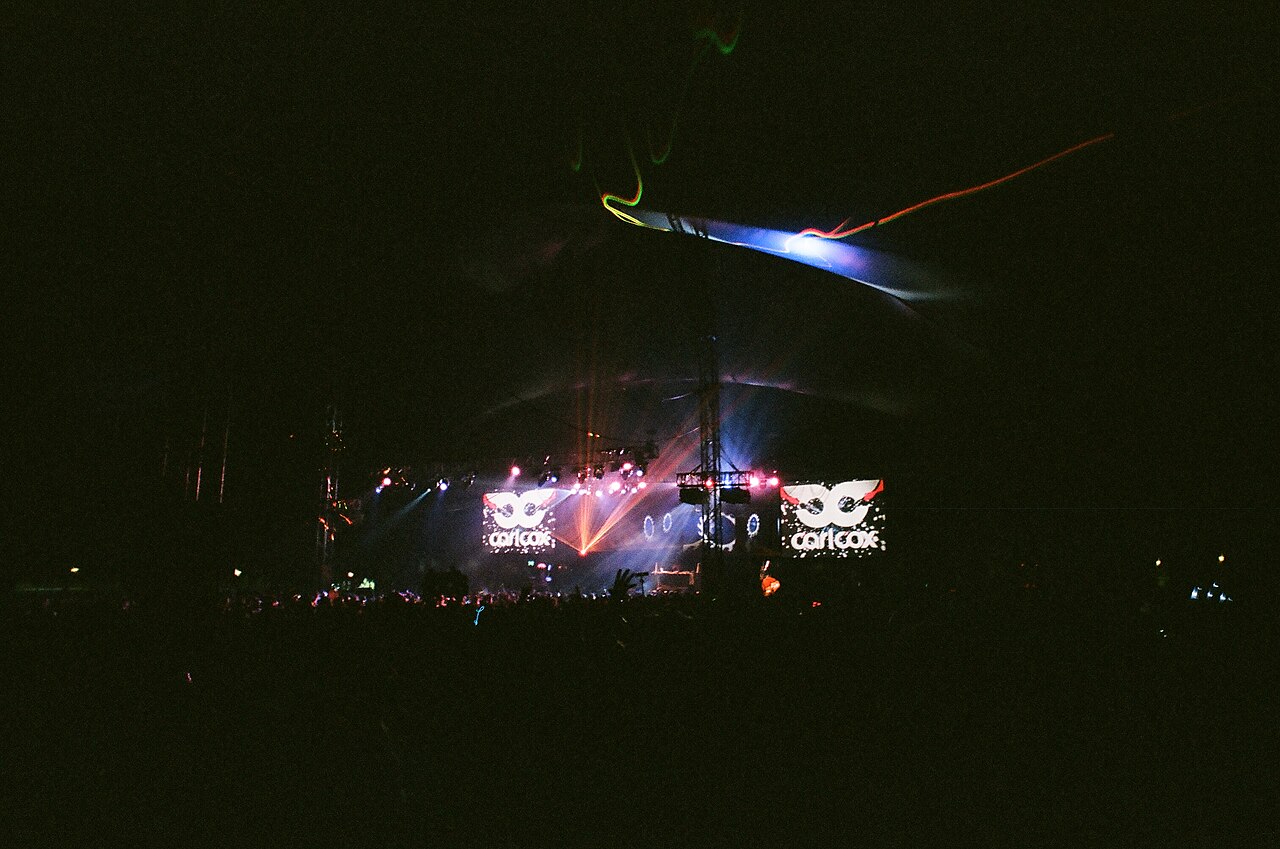
CARL COX + CARLITA is listed for NOV 14 2026 at Club Space Miami in MIAMI. The advertised program is categorized as techno / house, with a club format. Explore the announced artists and their musical backgrounds below before planning your visit.
For electronic-music fans following techno / house, this listing brings together the available artist, venue and event details in one place. Doors, entry requirements and any changes should be confirmed against the organizer's event-specific announcement before traveling.
Artist spotlight: Carl Cox started buying turntables as a teenager, not as a strategy to become a global festival star. He was drawn to the music itself. At fifteen he worked as a mobile DJ, and the records in his bags moved from disco into rare groove, hip-hop and electro as new sounds began crossing London’s clubs. It was the kind of education that taught a person to read a crowd before the crowd knew what electronic music would become.
Then Chicago acid house arrived. Cox has described hearing Phuture’s Acid Trax in 1987 and recognizing a turning point. He began introducing the strange new sound into parties still centered on familiar funk, soul and groove. Some people stopped and listened. That moment of surprise—making an audience hear something they did not know they needed—became the engine of his career.
The broader rave explosion gave him space to experiment on a larger scale, including the notorious three-turntable approach that could make the dawn feel like the night was only beginning.
The industry noticed him in 1991 when I Want You, released through Paul Oakenfold’s Perfecto label, reached No. 23 on the UK singles chart. Cox even made an appearance on Top of the Pops. That would have been a reasonable moment to focus on radio records and the pop charts.
He chose a different route. As British dance music splintered into more commercial sounds and new underground styles, Cox leaned further into techno. The 1995 mix album F.A.C.T. became a reference point for a generation of fans and DJs, and his 1996 EP Two Paintings and a Drum extended the producer’s catalog.
The shift is an important part of his story. A commercial opportunity does not have to be the final definition of a musician. Cox treated fame as permission to keep digging, not as an excuse to play it safe.
Cox launched Intec Records in 1999, giving his techno ambitions a permanent home and opening the door for other producers. The label later returned as Intec Digital after an interruption, building an archive that also tells the story of how club music adapted from vinyl to download culture.
Then came the Ibiza years. Beginning in 2001, Cox built a residency at Space into a defining part of the island’s club identity. His official biography describes the early run as just six nights, eventually growing into seasons that dominated the calendar. By the time Space closed in 2016, his final fifteen-week run marked the end of a partnership that lasted fifteen consecutive seasons.
A residency is more than showing up at a booth every Tuesday. It means curating guests, shaping a sound, understanding an audience and holding that attention across a season. The same skill that worked at an intimate rave had scaled to an international nightlife institution.
The answer in 2026 is: build another night. After his 2025 return to Ibiza, Cox took over Sunday programming at UNVRS for a second season, June through October 2026. The venue’s own schedule documented extended all-night performances, house-focused programming and appearances with artists such as David Guetta, Louie Vega, Honey Dijon and Richie Hawtin.
It would be easy to write this as a story about the biggest DJ in the biggest room. But the interesting continuity is the curatorial instinct. Cox is still willing to cross eras, to play a record the audience has not yet discovered and to stand behind that choice.
The lesson for the next generation is bigger than learning a three-deck trick. Music changes; technology changes; venues close. Your curiosity is the one piece of equipment worth keeping forever.
Plan your visit
Date
NOV 14 (2026)
City
MIAMI
Venue
Club Space Miami
Music
TECHNO / HOUSE
Format
CLUB
Age policy
Check with organizer
Doors / set times
Not announced in the verified record
Artists & lineup
Meet the announced artists and explore their music, past work and performance backgrounds.
Carl Cox started buying turntables as a teenager, not as a strategy to become a global festival star. He was drawn to the music itself. At fifteen he worked as a mobile DJ, and the records in his bags moved from disco into rare groove, hip-hop and electro as new sounds began crossing London’s clubs. It was the kind of education that taught a person to read a crowd before the crowd knew what electronic music would become.
Then Chicago acid house arrived. Cox has described hearing Phuture’s Acid Trax in 1987 and recognizing a turning point. He began introducing the strange new sound into parties still centered on familiar funk, soul and groove. Some people stopped and listened. That moment of surprise—making an audience hear something they did not know they needed—became the engine of his career.
The broader rave explosion gave him space to experiment on a larger scale, including the notorious three-turntable approach that could make the dawn feel like the night was only beginning.
The industry noticed him in 1991 when I Want You, released through Paul Oakenfold’s Perfecto label, reached No. 23 on the UK singles chart. Cox even made an appearance on Top of the Pops. That would have been a reasonable moment to focus on radio records and the pop charts.
He chose a different route. As British dance music splintered into more commercial sounds and new underground styles, Cox leaned further into techno. The 1995 mix album F.A.C.T. became a reference point for a generation of fans and DJs, and his 1996 EP Two Paintings and a Drum extended the producer’s catalog.
The shift is an important part of his story. A commercial opportunity does not have to be the final definition of a musician. Cox treated fame as permission to keep digging, not as an excuse to play it safe.
Cox launched Intec Records in 1999, giving his techno ambitions a permanent home and opening the door for other producers. The label later returned as Intec Digital after an interruption, building an archive that also tells the story of how club music adapted from vinyl to download culture.
Then came the Ibiza years. Beginning in 2001, Cox built a residency at Space into a defining part of the island’s club identity. His official biography describes the early run as just six nights, eventually growing into seasons that dominated the calendar. By the time Space closed in 2016, his final fifteen-week run marked the end of a partnership that lasted fifteen consecutive seasons.
A residency is more than showing up at a booth every Tuesday. It means curating guests, shaping a sound, understanding an audience and holding that attention across a season. The same skill that worked at an intimate rave had scaled to an international nightlife institution.
The answer in 2026 is: build another night. After his 2025 return to Ibiza, Cox took over Sunday programming at UNVRS for a second season, June through October 2026. The venue’s own schedule documented extended all-night performances, house-focused programming and appearances with artists such as David Guetta, Louie Vega, Honey Dijon and Richie Hawtin.
It would be easy to write this as a story about the biggest DJ in the biggest room. But the interesting continuity is the curatorial instinct. Cox is still willing to cross eras, to play a record the audience has not yet discovered and to stand behind that choice.
The lesson for the next generation is bigger than learning a three-deck trick. Music changes; technology changes; venues close. Your curiosity is the one piece of equipment worth keeping forever.
Carlita, the performing name of Carla Frayman, is a Turkish-Italian DJ, producer and multi-instrumentalist. Her path to club music began with a much broader musical education than the typical beginner’s production software. She studied and played instruments including cello and piano, and her wider musical background extends to bass, drums and guitar. Those skills shaped an ear for harmony and texture before the larger festival audiences arrived.
Her productions bring together house rhythms, warm melodies and influences that reflect her upbringing and international musical interests. She has spoken about the Turkish psychedelia, rock and electronic records that inform her taste. For a DJ, a background in acoustic performance need not disappear when a new set of tools enters the studio: it can become a distinct advantage when arranging music.
Carlita’s profile grew through DJ sets at venues and events such as Printworks, Circoloco, Tomorrowland and Burning Man. The crowds were different, but her approach made room for disco, house, melodic music and surprising transitions. Her Senza Fine party concept also connected performance with fashion and art, suggesting that a night of electronic music can be designed as a wider cultural experience.
The same curiosity informed a collaboration with DJ Tennis, a mentor and frequent creative partner. Instead of treating a DJ performance as disconnected from the rest of her work, Carlita developed a recognizable world of sound and presentation. That combination helps explain why her audience follows not only individual tracks but also her events and larger artistic projects.
On April 2, 2024, Counter Records released Time, a track Carlita had been using to close DJ sets. Its reception helped introduce her to Ninja Tune’s wider audience. The label described the single as a preview of a more substantial songwriting project and emphasized the unusual blend of classical and contemporary electronic influences within her production.
Her debut album Sentimental followed on November 15, 2024. The twelve-track record brought together guests including SG Lewis, DJ Tennis, Elderbrook and others. Tracks such as The Moment, Planet Blue and Wish You Knew showed different aspects of her melodic and rhythmic range. The Moment revisited music she had first worked on years earlier, turning part of her musical history into a new collaboration.
In the album announcement, Carlita explained that she wanted listeners to hear a different side of her work from the club records they knew. That distinction matters in an electronic-music environment where short clips from high-energy performances often dominate the public impression of an artist. A long-form album allows quieter ideas, unusual instruments and changing moods to sit alongside tracks intended for dancers.
Sentimental also provides an example for young producers: musical background is not something to hide because the current club fashion favors a particular sound. The experiences behind the recording can become the strongest part of an artist’s identity. Carlita’s development from instrumental performance to international DJing and album-making is not a rejection of her early training but a continuation of it.
EVENT-SPECIFIC TICKET PURCHASE LINK UNDER VERIFICATION — NO EXTERNAL REFERRAL PROVIDED
Venue & atmosphere
The show is scheduled for Club Space Miami in MIAMI. Visit the venue profile for further venue context where available. Venue address, accessibility, transport and entry policies should be checked with the venue or event promoter.